Saturday, April 5, 2008

No Sirve El Sig6 En Windowsblinds

Basil Carrot Papaya

Papaya As we know the fruits of papaya , botanical name Carica papaya tree in the family Caricaceae. It is a plant native to Central and South America, but now cultivated throughout the world although species in Africa and Asia in the tropics. The pawpaw is a tree without branches between 2 and 6 meters, with palmate leaves and fruit morphology are oblong and may be green, yellow, orange or pink.
Pharmacy used in dried latex obtained from immature fruits, also used the leaves and fruits as well as the enzyme obtained from the latex, called papain.


chemical composition. The latex contains mainly crude papain, which consists of a mixture of papain, chymopapain A and B, A and papayaproteinasa papayapeptidasa omega.

pharmacological properties.

  • Digestive System: facilitates Papain digestion of proteins, is resistant the pH of the stomach and antiulcer properties, antisecretory and anthelmintic (anti worms worms or parasites, usually diseases). It also has bactericidal action.

Therapeutic. The enzyme papain is used as a substitute in cases of severe gastric or duodenal, ie in cases of poor digestion by gastric acid deficiency leads to indigestion and gas pain. It also has utility as an assistant in the treatment of disorders of the oropharyngeal mucosa and oral lesions. Used for cleaning contact lenses cornea. The leaf extract and fruit juice is indicated in cases of indigestion or poor digestion. Another interesting use for their proteolytic and bactericidal properties is its use to treat acne.

Unwanted effects and contraindications. Possible allergic reaction to papaya and its components. Can occur in coagulation disorders. Avoid use in pregnant women and during lactation. Papain is potentially teratogenic and abortifacient.


administration and dosage forms. For poor digestion impaired gastric acid should be administered 30 minutes before meals. The recommended dose is 300 mg of leaf powder or dry.

Sunday, March 2, 2008

Htc Stock Symbol 2010


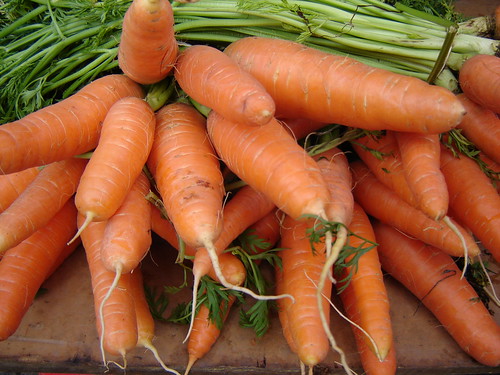
The Carrot or Charlotte, botanical name Daucus carota var. sativus, family Umbelliferae, is a plant known by all, with a characteristic typically orange root is widely used in food and also for its medicinal properties and dermopharmacy pharmacy. Although the wild carrot is native to Europe, is also naturalized in central Asia and the United States. Is grown, yes, all over the world. As a medicinal root used in the wild bean and seeds of wild and domestic varieties.


chemical composition. The carrot is rich in fiber , carotenes (alpha, beta and gamma, that the body will be transformed into vitamin A ) and vitamins B1, B2 , C, D , E, F . Also contains essential oil, essential fatty acids, minerals (especially potassium), sugars (glucose and sucrose), flavonoids, pectin and plant gums.

pharmacological properties.
  • Heart and circulation: carrot seed have a modest effect on coronary artery dilator also the root is hypotensive.
  • Kidneys: carrot certain substances decrease the blood sugar level, so that, despite containing sugars, is an interesting vegetable schemes for diabetics. It has a mild diuretic.
  • Digestive : its high content of pectin is causing antidiarrheal properties, particularly in the diarrhea of \u200b\u200bthe baby. Carrot seeds are carminative and useful in cases of flatulence and intestinal cramps.
  • Anthelmintic : its essential oil is toxic to intestinal parasites, especially worms, in which it is paralyzing. In these cases it should take freshly squeezed carrot juice, 100 to 500 cc each feeding 4 or 5 times a day for 2 days.
  • Dermatology: because they are high in carotenoids, carrot juice is used in cosmetics and skin nourishing as well as for the treatment of acne. Also in preparation for a bed, to strengthen and maintain, and to protect the skin. In cases of pruritus (itching) skin, are useful poultices of carrot juice. Also recommended in cases of ulcers. Their antioxidant vitamins give the skin.
Therapeutic. for its coronary vasodilator effect, is recommended for use in angina pectoris and myocardial infarction, even in cases of hypertension. On the other hand, it recommends its inclusion in diets for diabetics by lowering blood glucose levels. It is also recommended for diarrhea, especially children. Other uses are as an intestinal parasite (worms especially pinworms) and nutritional dermopharmacy as skin, antipruritic and maintenance effect of tan.

Unwanted effects and contraindications. not show any toxicity, but long after taking large amounts can see a yellow pigment in the skin due to carotene in carrots.

administration and dosage forms.
Seed Powder: 1 to 4 grams, several times a day.
-Juice: 50-250 cc per feeding.
Decoction: "soup" of carrot. A minimum of 10 g per cup carrot. Before meals.
-Capsules: up to 500 mg per capsule.

Wednesday, January 23, 2008

Irritation And Itchiness After Brazilian Wax

Espino Albar

The Espino Albar or Hawthorn is a shrub native to Europe, North Africa and western Asia. Beech grows in or near them. Its botanical name is oxyacantha Crataegus, family Rosaceae. You can reach 9 feet high, its leaves are bright green, its fruits are red and see some sort of flowers between April and June. Its wood is very hard. Used in phytotherapy and medicinal flowers (collected in spring), and their leaves and fruit. Other medicinal species are Crataegus monogyna and Crataegus laevigata .


chemical composition. The drug contains a complex composition but three groups include phytochemicals, flavonoids , proanthocyanidins and terpenoids. Among the flavonoids highlights the presence of principles derived from apigenin, luteolin and quercetin (hyperoside and vitexin). It also contains essential oil, purines, amines, vitamin C and minerals.

pharmacological properties.
  • cardiovascular system: moderate hypotensive effect, but prolonged in time. Reduces congestive heart failure and angina. Antiarrhythmic properties, regulating heart rhythm and preventing atrial fibrillation. It also has soothing properties of vascular smooth muscle. In vitro studies have shown that the standardized extract of hawthorn inhibits myocardial enzyme ATPase-Na +, K +-dependent and blocks the repolarizing potassium current, increasing the refractory period, which justifies its antiarrhythmic properties. Proanthocyanidins inhibit angiotensin converting enzyme, which further emphasizes its antihypertensive power, and is also potassium-sparing diuretic.
  • nervous system: it is an interesting sendante nervous system, and antispasmodic. Is indicated as a mild sedative.
  • Urinary System : already mentioned, for proanthocyanidins and its content in purines. This helps to lower high blood pressure.
Therapeutic. Indicated exaggerated heart palpitations (after discarding conditions). In any case it is a drug used in adjuvant drug therapies or in mild heart disease. Only be given to adults. also in cases of emotional excitement, stress and autonomic dystonia that affect sleep.

undesirable effects and contraindications. hawthorn extract has low toxicity but described the possible interactions with other cardioactive drugs. Should be administered with caution in patients with cardio.

preparations and dosage. The use of standardized extracts at a dose between 160 and 900 mg / day. There are many preparations on the market: 350 mg powder capsules (3-5 per day) criomolido powder capsules 270 mg, Capsules 132 mg standardized aqueous extract (3-6 day) or 200 mg (2 daily). You can also manage standardized fluid extract (0.5-2 g daily) or infusion (10 g / l, 15 min) 250 ml, 2-3 a day.