Friday, January 9, 2009

What Is The Radius Of The Large Circle?

UNI a few weeks of the admission exam


lapreuni.blogspot.com :
The examination of the National Engineering University (UNI) is scheduled for 16, 18 and February 20 will be held to review the studies that house, those days will be very difficult for future architects and engineers and architects to talk about them to conduct a review scheduled for February 1 and they have to giving a review of "vocational aptitude."

this week that I call "death week" will be measured individuals qualified to serve the country, UNI because of its prestige in engineering has always been the demand for academics to enter the university as its " strong "has been the numbers and their demands, they are called: The UNI, University of entrepreneurs.

If you want to apply to the UNI have time check http://www.admision.uni.edu.pe/
and if for some reason you want a half scholarship (you have time until January 20) to give you a discount so you can have all this on this website just hurry that registration on January 30, 2009

Sunday, October 26, 2008

Play .rsd File Rosetta

Angelica Borage

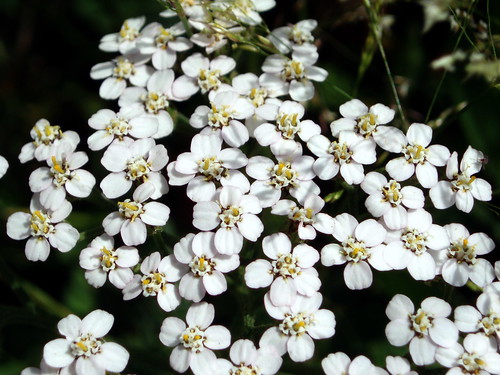
The Aquileia, also popularly known as Yarrow or Cientoenrama of botanical name Achillea millefolium ( Asteraceae) is a perennial that reaches the feet in height. It blooms from May to October and its flowers are grayish-white (sometimes pink or purple) and aromatic. Its taste is bitter, astringent and slightly salty. It grows in meadows, edges roads, pastures and barren and wet places throughout Europe, Asia, Africa, North America and Australia. It is used as though the whole plant medicinal flowers are the most active.


chemical composition. essential oil, which is 0.02 to 0.5% of fresh flowers. Also found in the leaves and to a lesser extent the stem. The most abundant component of the essential oil is chamazulene (40%) which is the same as found in chamomile . Other active constituents are flavonoids , sesquiterpene lactones , bitter substances, glycosides, polyunsaturated fatty acids , tannins, vitamin C and nitrogenous substances such as choline.

pharmacological properties.
  • Digestive System: yarrow is a good stomach tonic that aids digestion and which has properties choleretic and antispasmodic and anti-inflammatory . inflammatory properties are general and nonspecific . It is also an appetite stimulant.
  • cardiovascular system : has a antihaemorrhagic effect discrete, reducing clotting time. Also due to the presence of choline and its diuretic effect is slight hypotensive action smooth.
  • Other: antibiotic action on Staphylococcus aureus infections.
Therapeutic. Recommended for use in digestive problems such as gastrointestinal inflammation or slow digestion (dyspepsia). It can also be used as an appetite stimulant in cases of anorexia and to prevent nausea. In addition to its antispasmodic properties used for the digestive system is very useful gynecology, rules painful (dysmenorrhea), menorrhagia, amenorrhea and leucorrhoea. Its effect antihaemorrhagic bleeding is particularly useful in bladder, lung, hemorrhoid. Classically used for its antibiotic effect vaginitis.

Unwanted effects and contraindications. Well tolerated in general. Causes hives in sensitive people yarrow.

administration and dosage forms.
-Decoction: 30 to 60 g per liter of water.
-Fluid Extract : 3 to 6 g daily.

-Tincture: 20 to 30 drops several times a day.
-Essential oil: 5 drops. Achilles
-Syrup: 10% of fluid extract of yarrow in simple syrup. It takes teaspoons.

Tuesday, July 8, 2008

Hot Topic I Heart Boobies


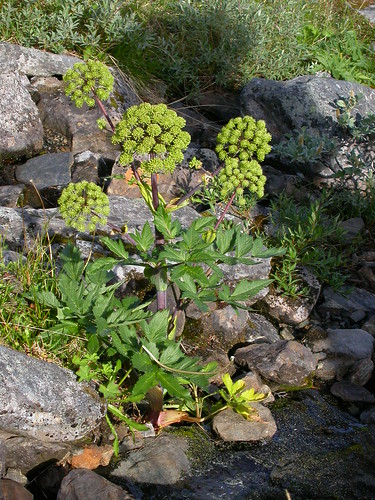
The name Angelica species know Angelica archangelica (Umbelliferae). Its name comes from the popular belief that the plant is a gift from the Archangel Gabriel for their healing properties. It is a plant of the Umbelliferae family, whose habitat is located in marshes and swamps and damp places in central Europe and northern Asia, au nthat is grown in many countries, especially in central Europe. In Spain there predominantly wild angelica, with the same therapeutic activity but lower power, while we find Angelica archangelica in high mountain areas. In America there is another species similar properties is the angelic atro-purpurea. It is a biennial plant consignment ro bust and small dark root secondary rootlets. By cutting the roots, leaving a yellowish liquid, resinous, bitter and rich in essential oil. The plant reaches 70 inches and blooms in April, fruiting month or month and a half after flowering. The medicinal parts are the root and less seeds. The root should be collected in autumn of second year and that is when the concentration of active compounds is maximum.


chemical composition. essential oil (1-1.5%), phellandrene rich. also contains coumarins and furocoumarins and angelic acid, tannins, sugars and resins.

pharmacological activity.
  • Digestive System: in this field is where angelica has its greatest impact. Has traditionally been used in digestive problems such as poor appetite, dyspepsia (indigestion hard), put orismo (intestinal gas). Bitter by nature, is a stomach tonic improves digestion, anti-spasmodic properties and antiflatulents . Is soothing the digestive system, so it is recommended in painful problems of the digestive system or nervous. Another interesting property is that it decreases saburra (yellowish-white layer covering the tongue).
  • Nervous System: treatment of nervous disorders such as migraine or nervous type cramps.
  • Gynecology: promotes menstruation. For this activity are most effective in the resulting seed root.
  • Otolaryngology: by its tannin content, is used as a gargle to treat disorders of the throat, in combination with other plants such as blackberry.
  • Endocrine system: recent research s the angelic enal inhibits the adrenal cortex. For this the angelic used as a sedative to the nervous system, decreases the production of adrenaline and is effective against stress .
Therapeutic. digestions is indicated in lack of appetite and anorexia, and when there is intestinal gases, ie, improves digestion difficult. Recommended for use in stomach pain due to any cause. Another use is to treat nervous disorders, migraines, stress , nervous type cramps ... Other indications are in cases of menstrual problems such as amenorrhea . also advised to treat nausea and vomiting in early pregnancy. Finally recommended gargling with angelica and blackberry to treat tonsillitis and pharyngitis.


Unwanted effects and contraindications. plant is well tolerated.

administration and dosage forms.
-Infusion of the root, or, failing that, stems and seeds. 30 to 50 g per liter of water. If boiling is prolonged, reduces the medicinal effect of loss of essential oils. This also happens if you wait too long to take since the compounds assets are volatile.
Powder: 5 to 10 g daily.
-Tincture: 20 to 50 drops before meals.
-Mother tincture: 40 drops three times daily. Fluid-extract
: 0,5-1 g, several times a day.