Thursday, May 8, 2008

Calgary Jabbawockeez Glove


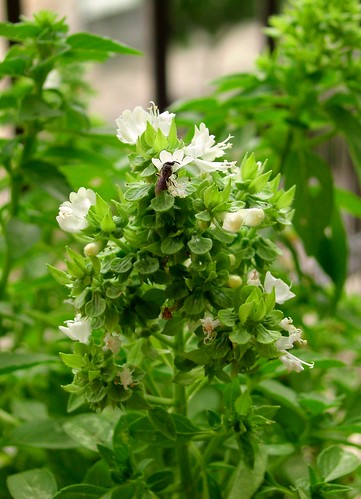
The or Alhábega Basil (basil in English) is a plant native to India, and cultivated since ancient times throughout the Mediterranean basin line. Measuring about 60 cm tall, with sturdy stems, pale green leaves and white or slightly pink flowers that appear mid-summer. The whole plant emits a strong aromatic smell, as well as medicinal value has a great interest especially in the kitchen cooking EDITERRANEAN m, which is used in salads, meats, soups and pasta sauces as the famous pesto, which is the main component.
The botanical name for basil is Ocimum basilicum , the family of Labiatae. Pharmacy is used as medicine the whole plant, especially leaves and flowers.

chemical composition. Basil is rich in essential oil (up to 1%), which is of variable composition, and contains linalool, estragol, pinene, eugenol and camphor and others. It also contains tannins by 4%.

pharmacological properties.
  • Digestive System: has a spasmolytic effect (prevents stomach cramps), eupéptico (ie, which aids digestion) and stomach. A level tract is also important antivomitiva owned. Also used as antianorexígeno to stimulate appetite.
  • Nervous System: is a hypnotic weak. properties tranquilizers and muscle relaxants.
  • Infections essential oil is a good antiseptic n .
Therapeutic. is indicated in heavy digestions, processes gastric or intestinal inflammation, and nausea antivomitivo effect. Also recommended as an appetite stimulant in anorexia or children. Another use is as relaxing stress or nervousness especially if associated with processes d igestivos, manage valerian with lemon balm or , through internal or diluting an infusion of basil leaves in hot bath water. Another use is as an antiseptic, essential oil diluted with external via wet cloth or by gargling.
Another use is effective as a mosquito repellent.

Unwanted effects and contraindications. basil plant is not toxic and no side effects, although its properties are weak or moderate. As always, caution with essential oils, never use concentrated and can irritate the mucous membranes, n administered via external or open wounds.


administration and dosage forms.
-Infusion is prepared at 1-2%, ie using 10 to 20 g per liter, digestive problems.
-Essential oil: Use as an antiseptic for orally 2 to 3 drops, two or three times a day, and dissolved in a tea.
-Mother tincture: 40 drops three times daily.

Saturday, April 5, 2008

No Sirve El Sig6 En Windowsblinds

Basil Carrot Papaya

Papaya As we know the fruits of papaya , botanical name Carica papaya tree in the family Caricaceae. It is a plant native to Central and South America, but now cultivated throughout the world although species in Africa and Asia in the tropics. The pawpaw is a tree without branches between 2 and 6 meters, with palmate leaves and fruit morphology are oblong and may be green, yellow, orange or pink.
Pharmacy used in dried latex obtained from immature fruits, also used the leaves and fruits as well as the enzyme obtained from the latex, called papain.


chemical composition. The latex contains mainly crude papain, which consists of a mixture of papain, chymopapain A and B, A and papayaproteinasa papayapeptidasa omega.

pharmacological properties.

  • Digestive System: facilitates Papain digestion of proteins, is resistant the pH of the stomach and antiulcer properties, antisecretory and anthelmintic (anti worms worms or parasites, usually diseases). It also has bactericidal action.

Therapeutic. The enzyme papain is used as a substitute in cases of severe gastric or duodenal, ie in cases of poor digestion by gastric acid deficiency leads to indigestion and gas pain. It also has utility as an assistant in the treatment of disorders of the oropharyngeal mucosa and oral lesions. Used for cleaning contact lenses cornea. The leaf extract and fruit juice is indicated in cases of indigestion or poor digestion. Another interesting use for their proteolytic and bactericidal properties is its use to treat acne.

Unwanted effects and contraindications. Possible allergic reaction to papaya and its components. Can occur in coagulation disorders. Avoid use in pregnant women and during lactation. Papain is potentially teratogenic and abortifacient.


administration and dosage forms. For poor digestion impaired gastric acid should be administered 30 minutes before meals. The recommended dose is 300 mg of leaf powder or dry.

Sunday, March 2, 2008

Htc Stock Symbol 2010


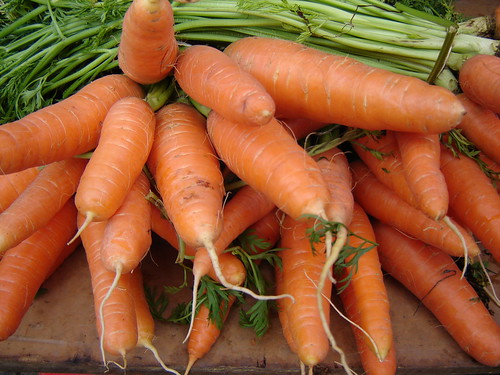
The Carrot or Charlotte, botanical name Daucus carota var. sativus, family Umbelliferae, is a plant known by all, with a characteristic typically orange root is widely used in food and also for its medicinal properties and dermopharmacy pharmacy. Although the wild carrot is native to Europe, is also naturalized in central Asia and the United States. Is grown, yes, all over the world. As a medicinal root used in the wild bean and seeds of wild and domestic varieties.


chemical composition. The carrot is rich in fiber , carotenes (alpha, beta and gamma, that the body will be transformed into vitamin A ) and vitamins B1, B2 , C, D , E, F . Also contains essential oil, essential fatty acids, minerals (especially potassium), sugars (glucose and sucrose), flavonoids, pectin and plant gums.

pharmacological properties.
  • Heart and circulation: carrot seed have a modest effect on coronary artery dilator also the root is hypotensive.
  • Kidneys: carrot certain substances decrease the blood sugar level, so that, despite containing sugars, is an interesting vegetable schemes for diabetics. It has a mild diuretic.
  • Digestive : its high content of pectin is causing antidiarrheal properties, particularly in the diarrhea of \u200b\u200bthe baby. Carrot seeds are carminative and useful in cases of flatulence and intestinal cramps.
  • Anthelmintic : its essential oil is toxic to intestinal parasites, especially worms, in which it is paralyzing. In these cases it should take freshly squeezed carrot juice, 100 to 500 cc each feeding 4 or 5 times a day for 2 days.
  • Dermatology: because they are high in carotenoids, carrot juice is used in cosmetics and skin nourishing as well as for the treatment of acne. Also in preparation for a bed, to strengthen and maintain, and to protect the skin. In cases of pruritus (itching) skin, are useful poultices of carrot juice. Also recommended in cases of ulcers. Their antioxidant vitamins give the skin.
Therapeutic. for its coronary vasodilator effect, is recommended for use in angina pectoris and myocardial infarction, even in cases of hypertension. On the other hand, it recommends its inclusion in diets for diabetics by lowering blood glucose levels. It is also recommended for diarrhea, especially children. Other uses are as an intestinal parasite (worms especially pinworms) and nutritional dermopharmacy as skin, antipruritic and maintenance effect of tan.

Unwanted effects and contraindications. not show any toxicity, but long after taking large amounts can see a yellow pigment in the skin due to carotene in carrots.

administration and dosage forms.
Seed Powder: 1 to 4 grams, several times a day.
-Juice: 50-250 cc per feeding.
Decoction: "soup" of carrot. A minimum of 10 g per cup carrot. Before meals.
-Capsules: up to 500 mg per capsule.